Action
Model what a user does, from an individual action to a series of steps.

Model the logic, not just the steps
Create user flows that connect user actions to system outcomes, state changes and branching logic. Make complex paths, exceptions and unanswered decisions visible before development.
Traditional user flow diagrams show what someone does, but don't always explain how the system responds or what happens next.
Validation rules, permissions, alternative outcomes, failures and state changes can remain hidden until detailed design or development is already underway.
Bucket Flows helps teams make that logic visible earlier, when there's still time to question assumptions and resolve gaps.
Make branching paths, exceptions and alternative outcomes part of the flow.
Make assumptions, missing decisions and potential dead ends easier to spot.
Give UX, business analysis, product and engineering teams a clearer basis for discussion and decisions.
Model what a user does, from an individual action to a series of steps.
Define how the system responds, including successful results, failures and alternative paths.
Show what has changed as a result and what can happen next.
Bucket Flows connects actions, outcomes and state changes in one structured model, making complex branching logic easier to understand and discuss.
See how user actions connect to system outcomes and state changes in a structured model. Explore branching paths, exceptions and alternative outcomes without losing sight of the wider flow.
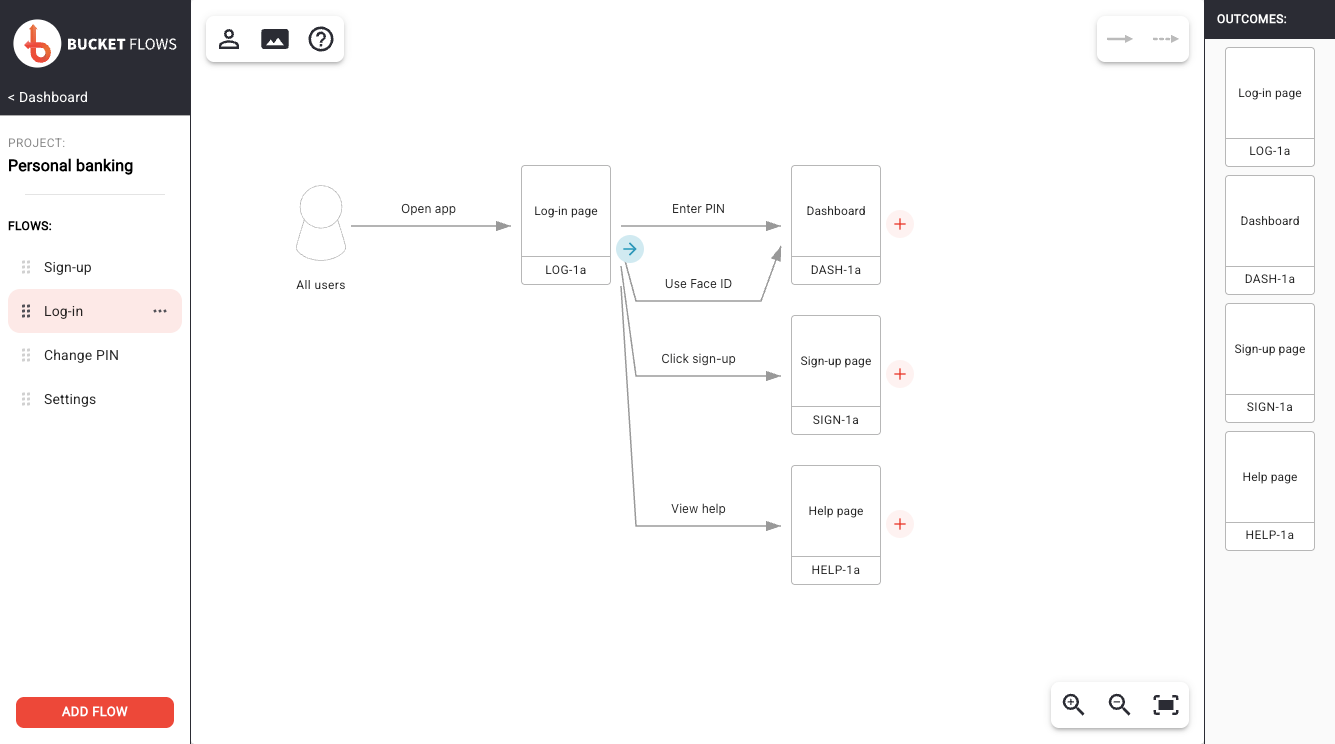
An example user flow created in Bucket Flows.
Bucket Flows helps different disciplines work from a shared understanding of how a digital service behaves.
Map user interactions, alternative paths and potential points of friction across a service.
Document business rules, system responses, exceptions and state changes alongside user actions.
Clarify intended product behaviour, identify unanswered decisions and align requirements before development.
Work from a shared model to discuss complex interactions, challenge assumptions and resolve gaps.
Particularly useful for multi-step, rules-heavy services involving validation, permissions, alternative outcomes and changing states.
Bucket Flows is a structured user flow modelling tool that helps UX, business analysis and product teams define how digital services work. It connects user actions to system outcomes, state changes and branching paths, making complex behaviour visible before development.
Traditional user flow tools typically use free-form diagrams to show the steps users take through a product or service.
Bucket Flows takes a structured approach, connecting user actions with system outcomes and state changes. This helps teams model branching logic, exceptions and alternative paths without losing sight of how the wider flow fits together.
Bucket Flows can be used to model a wide range of digital interactions, from straightforward user journeys to complex, multi-step processes.
Examples include account registration, authentication, onboarding, form submissions and services involving validation rules, permissions, exceptions or alternative outcomes.
By modelling user actions alongside system responses and possible outcomes, Bucket Flows makes gaps, assumptions and unanswered decisions easier to identify.
Teams can use these structured flows to review alternative paths, discuss potential dead ends and resolve questions before detailed design or development. Bucket Flows supports this analysis rather than automatically making design decisions.
Start creating user flows that connect user actions, system outcomes and state changes. Build a clearer understanding of how your digital service works before development begins.
Sign up